R3
Specifications
Overview
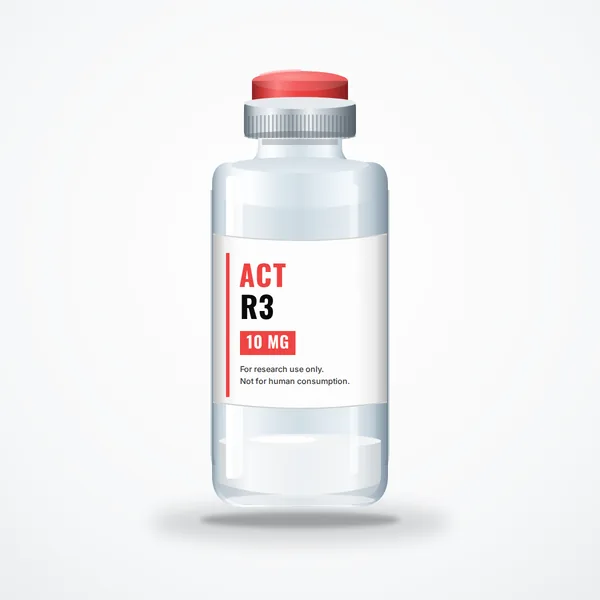
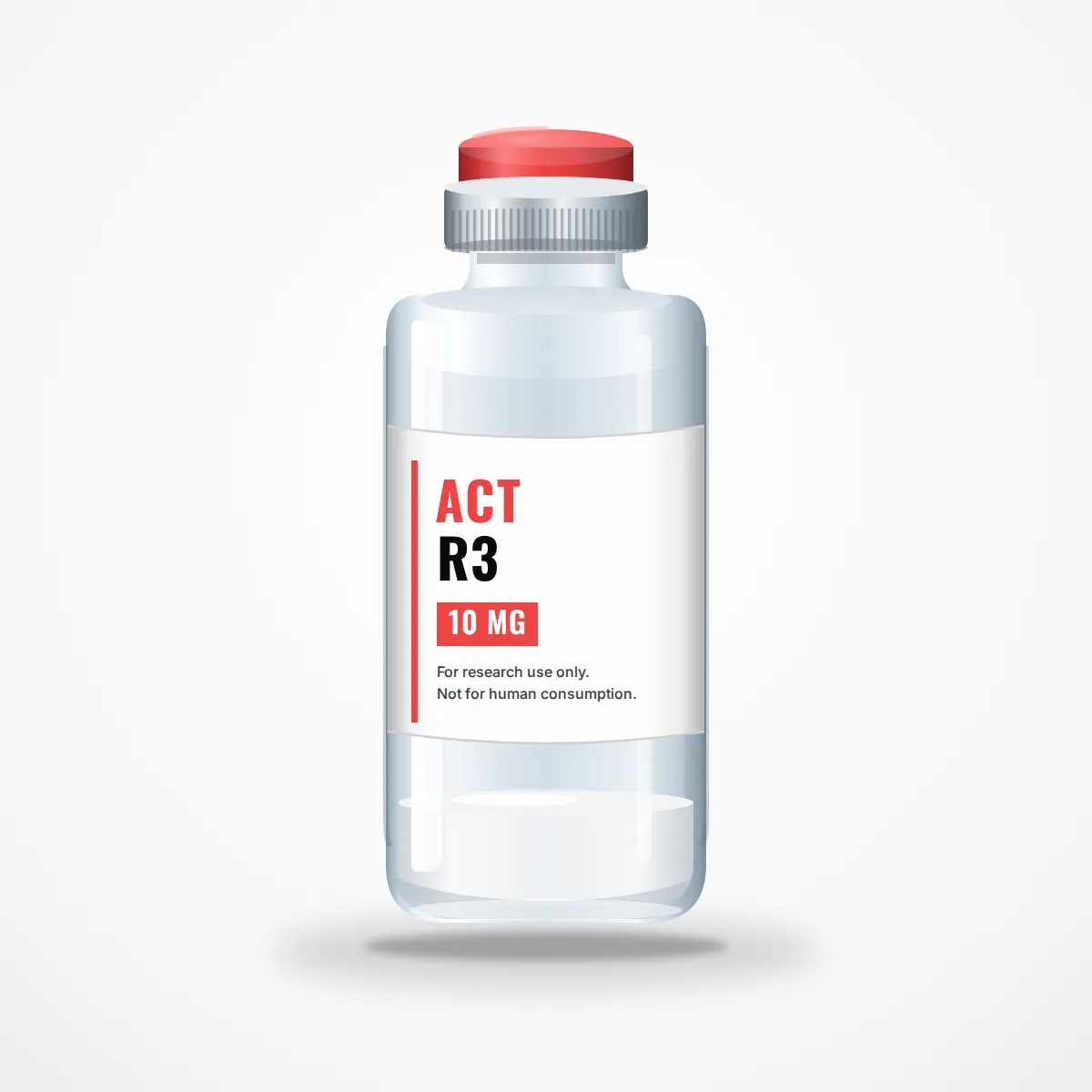
R3 is a single-molecule triple receptor agonist engineered to activate the glucose-dependent insulinotropic polypeptide (GIP) receptor, the glucagon-like peptide-1 (GLP-1) receptor, and the glucagon receptor. It represents the current frontier of incretin-based metabolic research, extending the dual-agonist approach of T2 by adding glucagon-receptor activity. ACT Peptides supplies R3 as a 10 mg lyophilized vial — the entry strength in a three-size range — for laboratory research.
Mechanism and Research Focus
The three receptors contribute distinct signaling. GLP-1 receptor activation is associated in the literature with glucose-dependent insulin secretion and central appetite signaling. GIP receptor activation contributes additional insulinotropic effect and has been studied for adipose-tissue actions. Glucagon receptor activation is the novel element: it is associated with increased hepatic glucose output but also with elevated energy expenditure and hepatic lipid mobilization, and the research question is whether the combination's net metabolic effect exceeds what dual agonism achieves. Balancing these opposing glycemic influences is precisely what makes triple agonism a technically demanding and heavily studied design problem.
What the Literature Examines
Published work covers receptor-binding and signaling characterization in transfected cell lines, rodent models of diet-induced obesity and metabolic dysfunction, hepatic steatosis models, energy-expenditure studies using indirect calorimetry, and — in the clinical literature — trials examining body weight and metabolic parameters. R3 is an investigational compound: it is not approved by the FDA or any comparable regulator, and clinical development is ongoing. Research-grade material supplied here is not the clinical trial product and should not be conflated with it in methods or citations.
Laboratory Handling and Storage
Supplied lyophilized. Store sealed vials at −20 °C protected from light; 2–8 °C acceptable short-term. Reconstitute by adding solvent slowly along the vial wall, swirling gently until fully dissolved — do not shake. As a lipidated peptide of moderate size, R3 can be slower to dissolve than small peptides; allow adequate time rather than agitating. Refrigerate reconstituted solution, aliquot where repeated sampling is planned, and follow your laboratory's stability SOP. Batch COA data confirming identity and purity are available on the COA page.
Experimental Design Considerations
Receptor-pharmacology work typically uses cell lines individually expressing human GIPR, GLP-1R, and GCGR, with cAMP accumulation assays run against each to establish relative potency — this three-receptor characterization is standard in the published literature and should be replicated when reporting new findings. In-vivo metabolic studies commonly combine body-composition measurement (EchoMRI or DEXA), indirect calorimetry for energy expenditure, glucose and insulin tolerance testing, and hepatic lipid quantification. Because glucagon-receptor agonism can raise hepatic glucose output, glycemic endpoints require particular care and appropriate comparator arms — dual agonist and vehicle at minimum. Pair-fed control groups are important in body-composition work to distinguish appetite-mediated from metabolic-rate effects. Record the batch COA and lot with study data.
Regulatory Status
R3 is an investigational compound not approved by the FDA or other regulators for any indication. This is research-grade material supplied for laboratory research use only, and it is not the clinical trial product. Not for human or veterinary use.