T2
Specifications
Overview
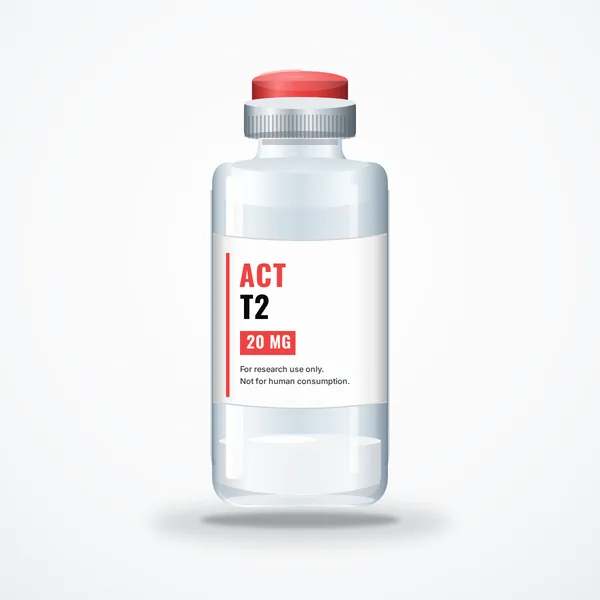
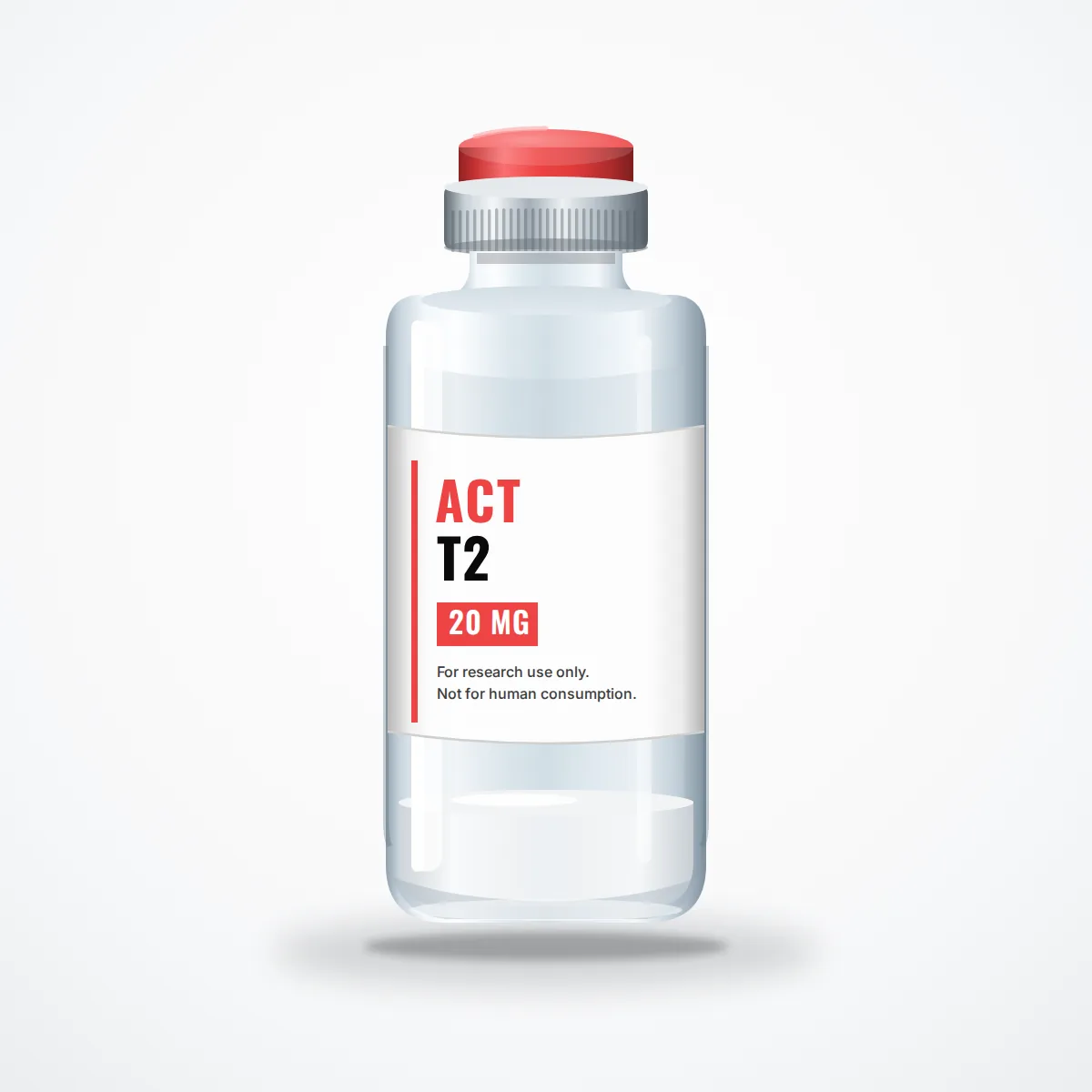
The 20 mg vial is the mid-strength T2 presentation, supplying twice the peptide mass of the entry format in a single lyophilized vial. Compound identity, purity specification, and research profile are identical to the 10 mg listing. The larger format is chosen by laboratories running concentration-response series, multi-arm comparisons, or extended time-course designs where sourcing all material from one lot removes batch variation as a confounder.
Mechanism and Research Focus
T2 activates GIPR and GLP-1R with reported greater potency at the former. Research examines how that asymmetry shapes metabolic outcomes relative to balanced dual agonists and GLP-1-selective compounds, and how biased signaling at GLP-1R — favoring cAMP over β-arrestin pathways — contributes to receptor trafficking and sustained signaling. The lipidation strategy that extends half-life is itself a subject of peptide-engineering research, as albumin binding alters distribution and effective exposure in model systems.
What the Literature Examines
Cell-based receptor characterization, rodent obesity and glucose-intolerance models, adipose-tissue and hepatic lipid studies, and comparative pharmacology against single- and triple-agonist compounds make up the preclinical record. Clinical data exist for approved pharmaceutical products containing this compound and pertain to those products in their approved populations. Research-grade material is a distinct article and should be described as such in publications.
Laboratory Handling and Storage
Store sealed at −20 °C protected from light; 2–8 °C short-term. Because this vial contains double the mass of the 10 mg format, verify solvent volume calculations before reconstituting to hit your target concentration — format switching mid-study is a frequent source of concentration error. Add solvent slowly along the wall and swirl; lipidated peptides foam readily and dissolve gradually. Aliquot the reconstituted solution into single-use volumes, refrigerate, and avoid freeze–thaw cycling. Use low-binding labware for dilute working solutions.
Experimental Design Considerations
Concentration-response work is where the larger vial earns its place: single-concentration experiments cannot reveal whether GIPR or GLP-1R activity dominates at a given exposure, and full curves at both receptors are needed to characterize the compound properly. For multi-week in-vivo studies, reconstituting once and aliquoting for the entire protocol keeps exposure consistent across timepoints and simplifies documentation. Include vehicle, a GLP-1R-selective comparator, and pair-fed controls; report medium or vehicle composition, since albumin content affects free-peptide availability for lipidated compounds. Record lot, COA, and reconstitution date in the study file.
Regulatory Status
Research-grade material with no regulatory approval. Approved pharmaceuticals containing this compound exist separately and are not this product. Laboratory research use only; not for human or veterinary use.