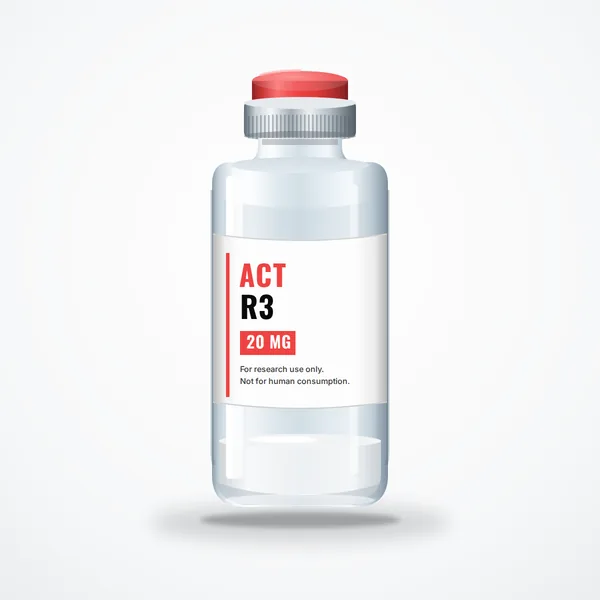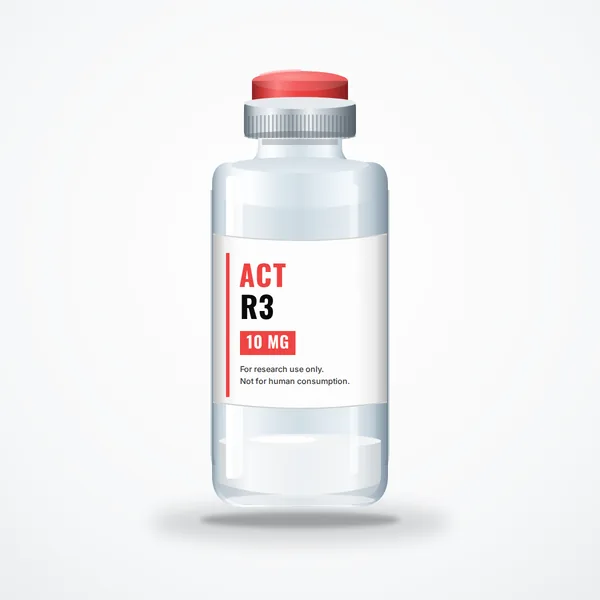
R3
Specifications
Overview
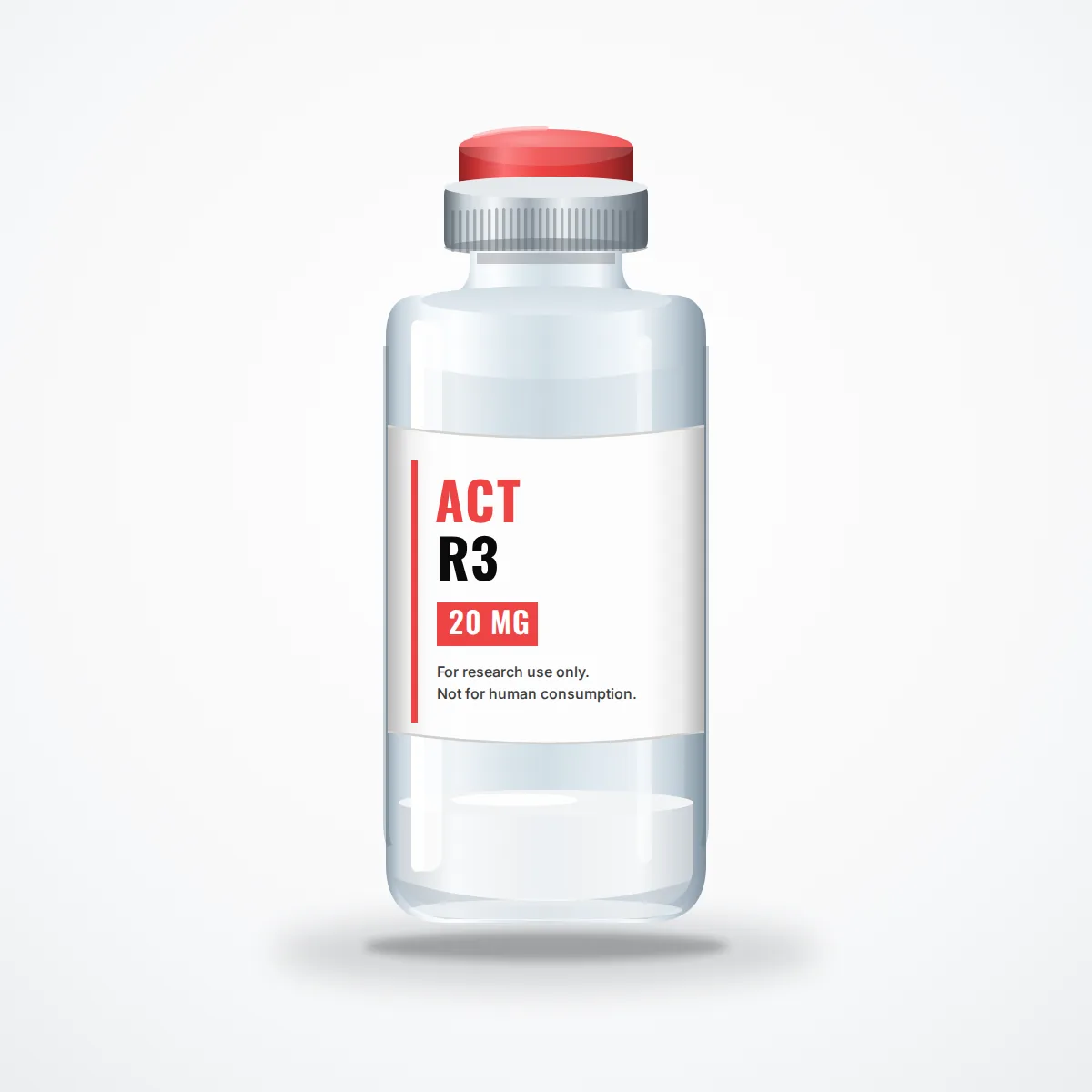
This is the mid-strength presentation of R3, supplying 20 mg of lyophilized triple-agonist peptide in a single vial. The compound and its research profile are identical to the 10 mg listing; the larger format exists for laboratories running extended study series, multi-arm designs, or concentration-response work that consumes more material from a single lot. Sourcing an entire study from one lot is a meaningful methodological advantage, since it removes batch variation as a confounder.
Mechanism and Research Focus
R3 activates the GIP, GLP-1, and glucagon receptors within one molecule. GLP-1 receptor signaling is studied for glucose-dependent insulin secretion and central appetite pathways; GIP receptor signaling for additional insulinotropic and adipose-tissue effects; and glucagon receptor signaling for hepatic lipid mobilization and energy expenditure, offset against its effect on hepatic glucose output. The central research question in this class is how the balance of three agonist activities determines net metabolic outcome — a question that requires careful potency characterization at each receptor rather than composite endpoints alone.
What the Literature Examines
Receptor-signaling characterization, diet-induced obesity models, hepatic steatosis research, indirect-calorimetry energy-expenditure studies, and glycemic-parameter work make up the preclinical record, alongside an active clinical trial literature. R3 holds no regulatory approval. Research-grade material differs from the clinical trial product, and published clinical results should not be presented as evidence about research-grade material used in laboratory settings.
Laboratory Handling and Storage
Store sealed vials at −20 °C protected from light; 2–8 °C for short-term storage. Because this vial holds twice the peptide mass of the 10 mg format, solvent volume must be scaled to reach your target concentration — a common source of error when switching formats mid-study. Add solvent slowly along the vial wall and swirl gently; allow time for complete dissolution rather than agitating. Aliquot the reconstituted solution into single-use volumes where the study design permits, refrigerate, and follow your laboratory's stability SOP.
Experimental Design Considerations
The larger format suits concentration-response designs, which are the most informative approach for a multi-receptor agonist: a single-concentration experiment cannot reveal whether an effect is driven by one receptor arm saturating before the others. Standard characterization pairs cAMP assays in GIPR-, GLP-1R-, and GCGR-expressing lines with downstream functional endpoints. In-vivo work typically includes vehicle, a dual-agonist comparator, and pair-fed controls, with body composition, indirect calorimetry, glucose tolerance, and hepatic lipid measures. When a study spans weeks, aliquoting from one reconstitution at the outset — rather than reconstituting repeatedly — keeps concentration consistent across timepoints. Record lot and COA data in the study file.
Regulatory Status
Investigational compound with no regulatory approval. Research-grade material supplied for laboratory research use only; not the clinical trial product, and not for human or veterinary use.