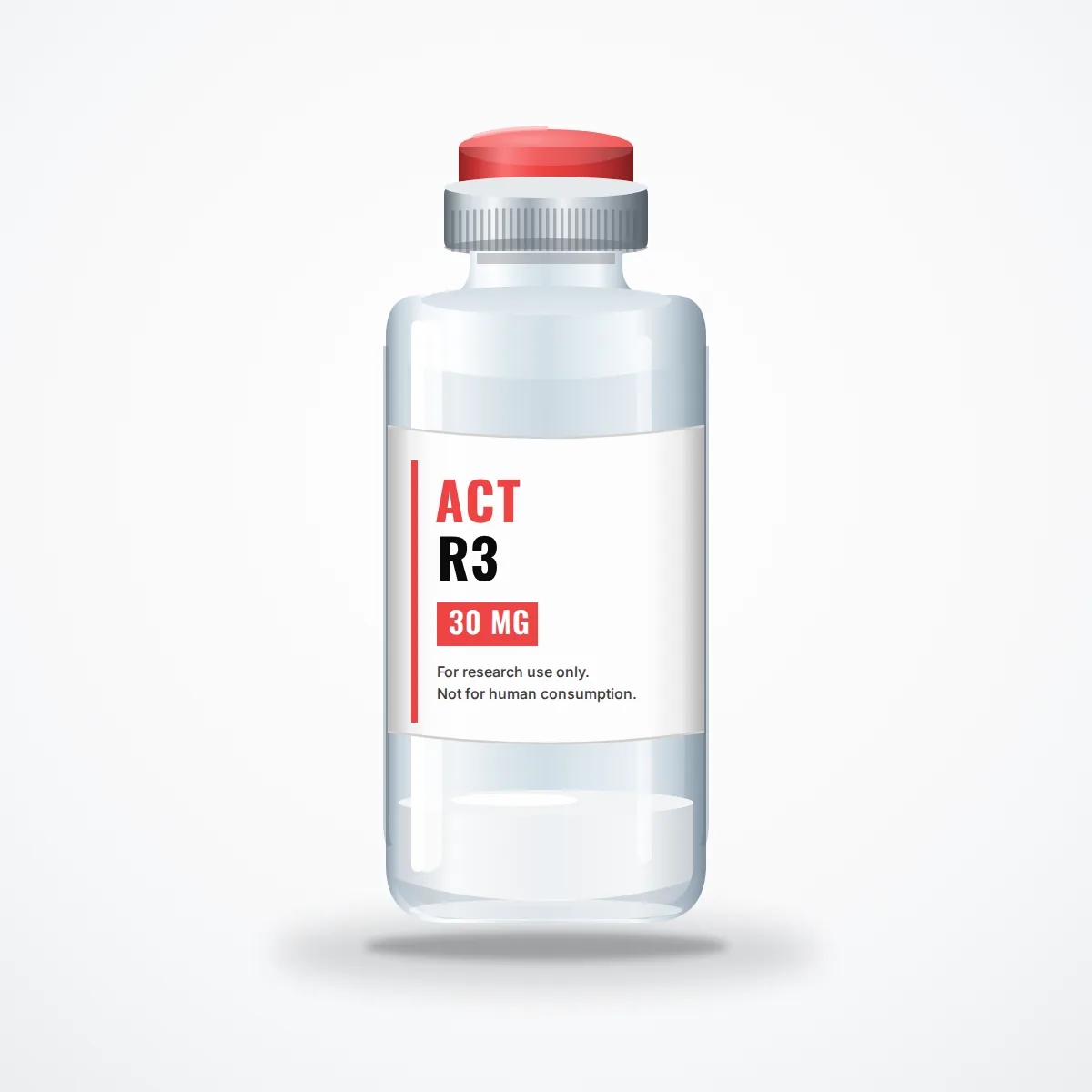
R3
Specifications
Overview
The 30 mg vial is the highest-strength R3 presentation in the ACT catalog, intended for laboratories with substantial material requirements — large-cohort animal studies, extended time-course designs, or multi-site protocols where consistency across a single lot is a stated methodological requirement. The compound, purity specification, and research profile match the 10 mg and 20 mg listings.
Mechanism and Research Focus
As a single molecule with agonist activity at the GIP, GLP-1, and glucagon receptors, R3 is studied for how the interaction of three signaling arms produces a net metabolic phenotype. The GLP-1 arm is examined for glucose-dependent insulinotropic and central appetite signaling; the GIP arm for insulinotropic and adipose-tissue effects; the glucagon arm for energy expenditure and hepatic lipid handling, balanced against its glycemic influence. Potency ratios among the three receptors are a central variable in the published characterization work, since they determine which arm dominates at a given concentration.
What the Literature Examines
Cell-based receptor characterization, rodent obesity and metabolic-dysfunction models, hepatic lipid studies, energy-expenditure work, and clinical trial reporting constitute the record. The compound remains investigational worldwide with no approval for any indication. Laboratories should describe research-grade material as such in publications and avoid citing clinical trial outcomes as evidence pertaining to laboratory-supplied material.
Laboratory Handling and Storage
Store sealed at −20 °C protected from light; 2–8 °C short-term. At 30 mg per vial, reconstitution volume and target concentration calculations should be verified before adding solvent — errors are costly at this quantity. Add solvent slowly along the vial wall, swirl gently, and allow full dissolution without agitation. Aliquot immediately into single-use volumes sized to your protocol, since repeated freeze–thaw of a large reconstituted stock is the main stability risk with high-mass vials. Refrigerate working aliquots and follow your laboratory's stability SOP.
Experimental Design Considerations
High-mass vials are most valuable in designs where lot consistency is critical: dose-ranging studies across many arms, long time-course experiments, and comparative work against dual agonists where every arm should draw from the same material. Plan the aliquot scheme before reconstituting — number of arms, timepoints, and replicates — so a single reconstitution serves the entire study. Standard characterization remains three-receptor cAMP assays paired with in-vivo body composition, indirect calorimetry, glucose tolerance, and hepatic lipid endpoints, with vehicle, comparator, and pair-fed controls. Document lot number, COA, reconstitution date, and aliquot storage conditions in the study record; for multi-week studies this documentation is what makes the data defensible.
Regulatory Status
Investigational compound, not approved by any regulator. Supplied as research-grade material for laboratory research use only. Not the clinical trial product; not for human or veterinary use.