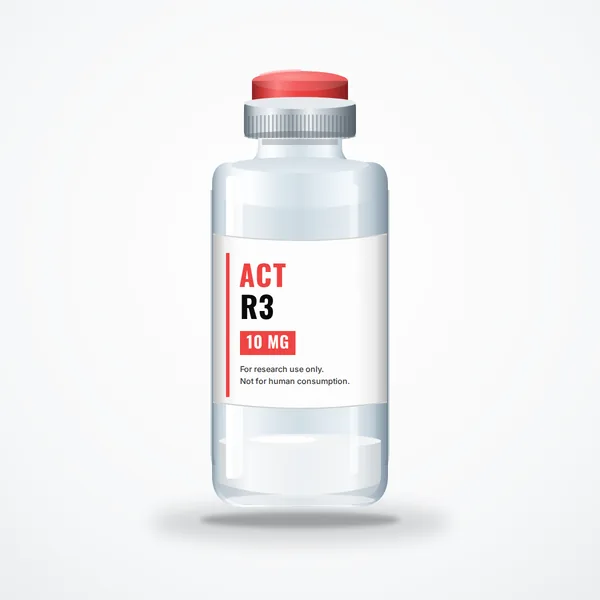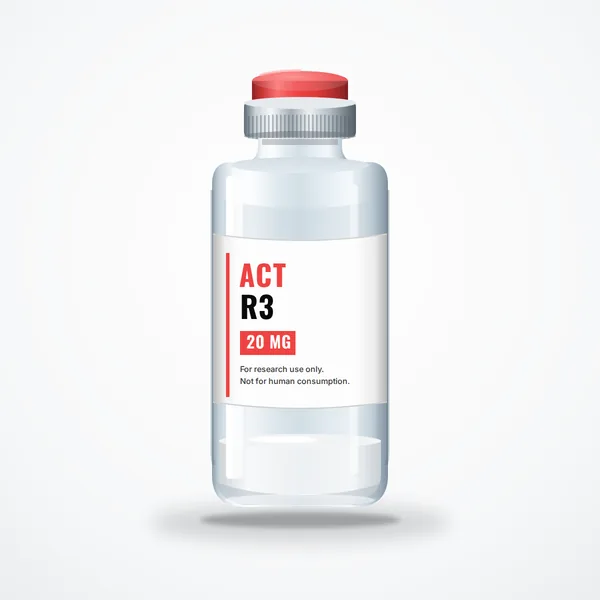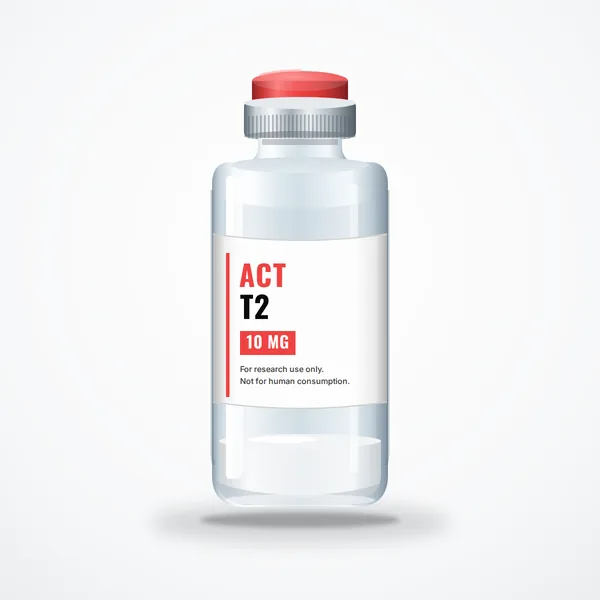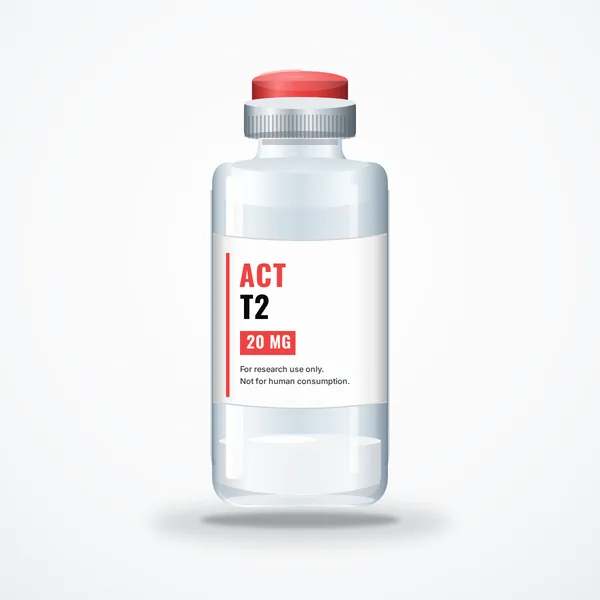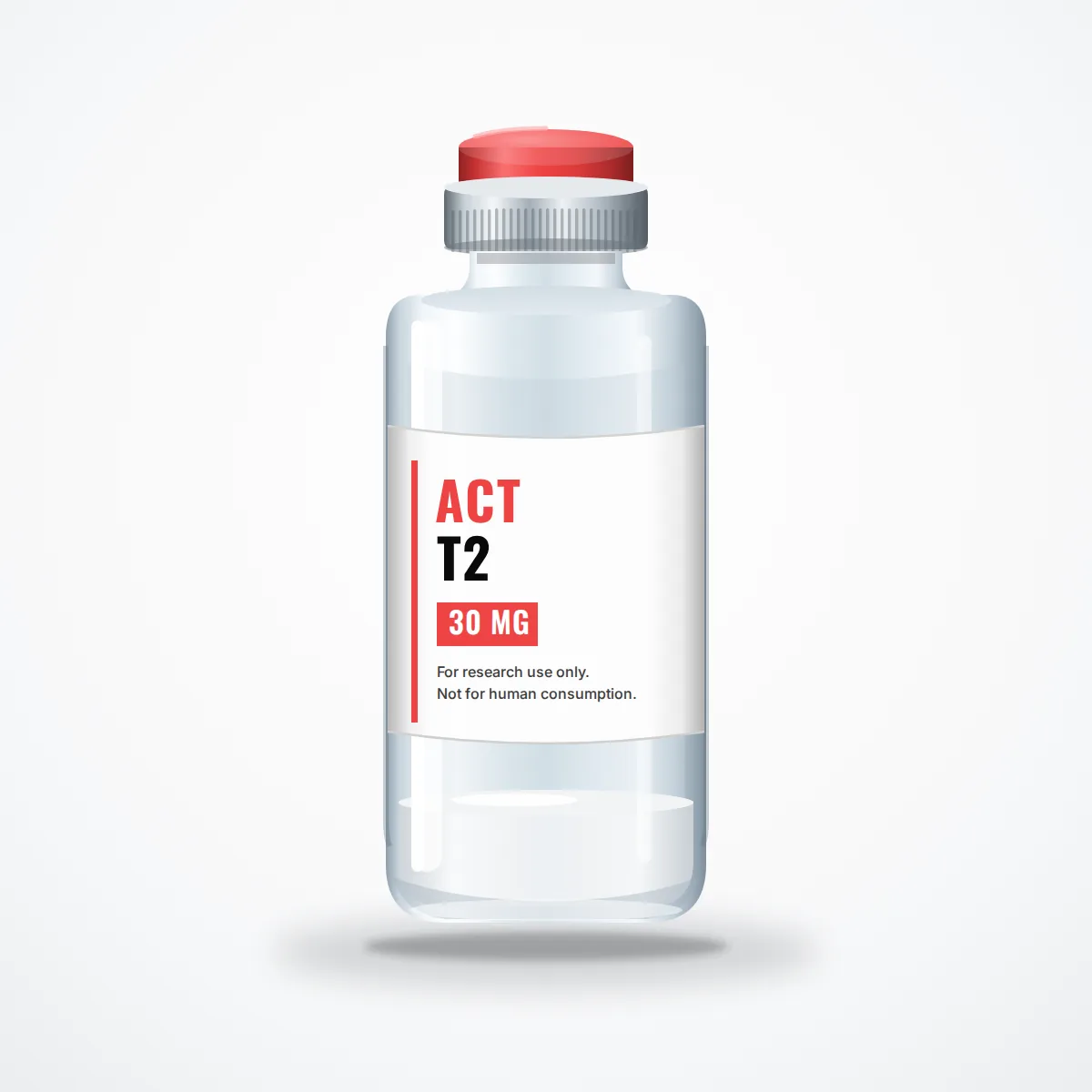
T2
Specifications
Overview
This is the highest-strength T2 format in the ACT catalog at 30 mg per lyophilized vial. It is intended for laboratories with substantial material requirements — large-cohort animal studies, extended dosing-frequency comparisons, or protocols spanning multiple experimental groups where lot consistency is a stated methodological requirement. Compound identity and purity specification match the smaller formats.
Mechanism and Research Focus
As a dual incretin receptor agonist, T2 engages GIPR and GLP-1R within a single molecule, with published potency data indicating an unbalanced profile favoring GIPR. Research questions concern how that balance determines metabolic phenotype, how biased GLP-1R signaling affects receptor internalization and sustained response, and how lipidation-driven albumin binding shapes exposure in model systems. These questions require enough material to run multiple concentrations across multiple arms, which is the practical rationale for a high-mass vial.
What the Literature Examines
Receptor pharmacology in transfected systems, diet-induced obesity and glucose-tolerance models, adipose and hepatic tissue studies, and comparative work against GLP-1-selective and triple-agonist compounds constitute the preclinical literature. An extensive clinical record exists for approved pharmaceutical products containing this molecule; those data describe the approved products and populations, not research-grade material, and the distinction should be explicit in any publication.
Laboratory Handling and Storage
Store sealed at −20 °C protected from light; 2–8 °C for short-term storage. At 30 mg, reconstitution planning matters: calculate target concentration and aliquot scheme before adding solvent, since errors are expensive at this quantity and re-dissolving is not an option once the vial is opened. Add solvent slowly along the wall and allow full dissolution without agitation; lipidated peptides foam and clarify slowly. Aliquot immediately into single-use volumes, refrigerate working aliquots, and avoid freeze–thaw of the parent stock.
Experimental Design Considerations
High-mass vials suit dose-ranging studies with many arms and long time courses. Plan the aliquot scheme against the full experimental matrix — arms, timepoints, replicates, and contingency — so one reconstitution serves the study. Receptor characterization remains GIPR and GLP-1R assays in parallel with matched concentration ranges; in-vivo work pairs body composition, glucose and insulin tolerance, and tissue endpoints, with vehicle, selective comparator, and pair-fed groups. Document lot number, COA, reconstitution date, vehicle composition, and aliquot storage conditions; for extended studies this record is what makes the dataset defensible under review.
Regulatory Status
Investigational research-grade material with no approval. Distinct from approved pharmaceutical products containing this compound. Supplied for laboratory research use only; not for human or veterinary use.